
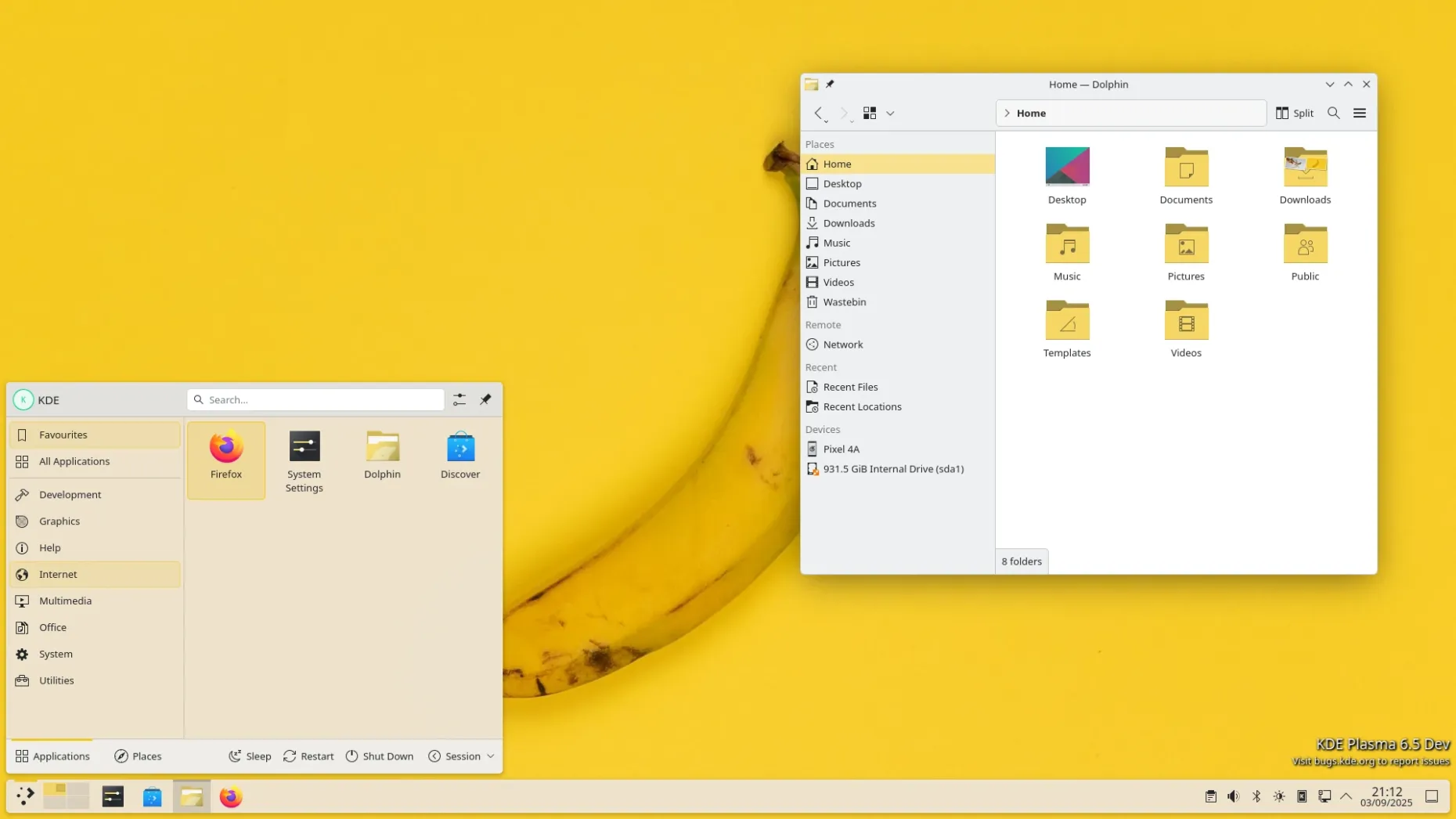
The KDE Project is speeding up work on its in-house operating system, KDE Linux. It is moving from alpha toward an upcoming beta release. Since its announcement a few months ago, the team has added new technologies, expanded hardware support, and improved the user experience.
The beta will run on the upcoming KDE Plasma 6.6 desktop environment. Renowned developer Nate Graham confirmed this. He said KDE Linux will also include the new Plasma login manager and KDE’s initial setup tool.
Notably, the OS now uses plasma-login-manager instead of SDDM. “This modern login manager integrates more deeply with Plasma,” Graham wrote. “It works well for systems like KDE Linux that use systemd.”
The team has also enabled delta updates by default. This cuts download sizes and speeds up system upgrades. At the same time, they’ve broadened hardware support. The OS now recognizes scanners, drawing tablets, smart cards, virtual cameras, and Android devices. It also supports Razer and Logitech keyboards and mice, plus YubiKeys.
File system support has improved too. Users can now mount LVM, exFAT, and XFS disks without extra steps. Other additions include Bluetooth file sharing, USB Wi-Fi dongles with built-in storage, Vulkan graphics on select GPUs, and professional audio devices.
The boot process is quieter now. Developers hid the GRUB menu by default for a cleaner startup. They also boosted performance through Zen kernel tweaks and low-latency audio settings. Usability got better too: RAR support now works out of the box, a “command not found” helper guides users, and Zsh configuration is more polished.
Graham stressed that KDE Linux currently targets KDE developers first. The team wants to build a stable, cohesive system that reflects their desktop vision. If all goes well, a final public release could arrive by year-end—making KDE Linux ready for everyday users.v
READ: Google’s Android PC Delayed Until 2028, ChromeOS Stays for Now