
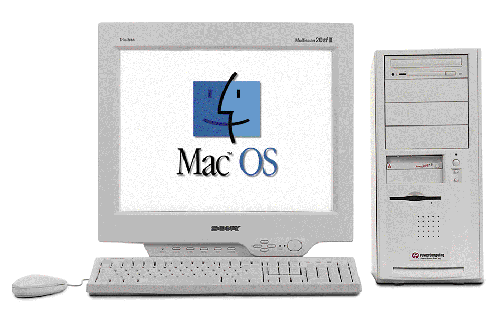
The Pios Magna 220 is a rare Macintosh clone developed by Pios Computer AG, based on the Tsunami architecture and the motherboard from the SuperMac S900 series. It comes equipped with a 220 MHz PowerPC 750 (G3) processor, 16 MB of RAM, and a 2.1 GB SCSI-II hard drive. The machine is housed in an expandable ATX-form tower case, and it supports dual processor upgrades, making it ideal for power users in professional or educational settings.
Released mainly in Germany, the Magna 220 stood out in 1998 for its modularity and flexibility, compatible with Mac OS 7.5.3 to 9.0, though official support from Apple ended at 8.1.
Pios Magna 220 – Full Technical Specifications
| Specification | Details |
|---|---|
| Model | Pios Magna 220 |
| Processor | PowerPC 750 (G3), 220 MHz |
| Backside Bus | 110 MHz |
| System Bus Speed | 44 MHz |
| Processor Upgrade | Daughtercard (Dual CPU supported) |
| Architecture | Tsunami |
| Level 1 Cache | 64 KB |
| Level 2, 3 Cache | 512 KB (backside), 512 KB |
| Data Path | 64-bit |
| RAM Type | 70 ns 168-pin DIMM |
| Standard RAM | 16 MB |
| Maximum RAM | 1040 MB |
| RAM Slots | 8 |
| Motherboard RAM | 16 MB |
| Graphics Card | MacPicasso 540, 4 MB VRAM |
| Max Video RAM | 8 MB |
| Hard Drive | 2.1 GB SCSI-II |
| CD-ROM | 32X |
| Floppy Drive | 1.44 MB (manual eject) |
| Expansion Slots | 6 PCI |
| Expansion Bays | 2 (5.25″ external), 3 (3.5″, 2 internal, 1 external) |
| Ethernet | AAUI, 10Base-T (10/100 optional with E100 card) |
| Modem | Not included |
| Battery | 3.6V Lithium |
| Case Type | Tower |
| Form Factor | Pios Magna (ATX) |
| Supported Mac OS | 7.5.3–7.6.1, 8.0–9.0 (officially up to 8.1) |
| Dimensions (HxWxD) | 17.25 x 7.0 x 17.5 inches |
| Weight | 28 lbs |
| Release Date | May 1, 1998 |
| Discontinued | September 1, 1998 |
| Original Price | $2200 USD |
Designed for Expandability and Performance
The Pios Magna 220 offers a balanced mix of performance and flexibility. Its support for dual processor cards, UltraSCSI, and large RAM capacity make it a hidden gem among Mac clones of the late ’90s. Though short-lived, it served a tech-savvy audience looking for Macintosh compatibility in a customizable package.