
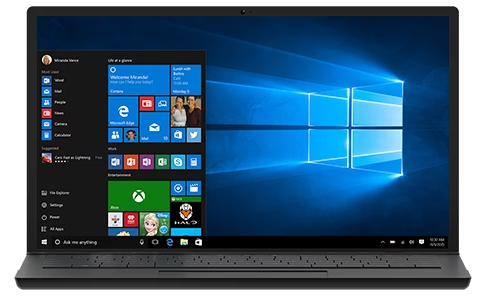
The Windows 10 end of support in October 2025 could cost global businesses billions if they delay upgrades. More than 120 million PCs worldwide are still expected to run the aging system after Microsoft halts support. Nexthink research shows that enterprises could spend over $7.3 billion keeping custom versions of Windows 10. Microsoft will charge $61 per device for the first year of extended security updates. The price doubles each year, hitting $244 by year three, making delays very expensive.
The transition away from Windows 10 has started but remains uneven. Between May and August 2025, the number of devices fell by 33 percent. Still, many enterprises continue to depend on the old system. Statcounter data shows Windows 11 now leads the market with 49.08 percent share, compared to 45.53 percent for Windows 10. That still leaves about 121 million devices active, with 30 percent in enterprise and public sector environments.
Continuing to use Windows 10 brings serious risks. Without updates, devices become easier targets for malware and ransomware. Nexthink warned that partial upgrades or mixed environments create productivity bottlenecks and friction across teams. The financial and security costs rise for every year companies hold on.
Migration to Windows 11 has challenges. Many firms face hardware compatibility issues, outdated drivers, or difficult deployment processes. Some IT teams report that Windows 11 is less stable, with more frequent crashes compared to Windows 10. These hurdles make organizations cautious, slowing adoption despite deadlines.
Experts advise firms to treat migration as a strategic project. Businesses should confirm that hardware and critical applications meet Windows 11 requirements before upgrading. This step helps avoid technical disruptions. Training employees on new features can also ease the shift, reduce confusion, and improve productivity. Viewing the transition as part of broader digital transformation allows companies to cut costs and strengthen resilience.
The countdown has begun. With Microsoft’s extended fees rising each year and cyber risks increasing, the Windows 10 end of support is a turning point. Early action saves money, lowers risks, and builds stronger IT systems. Delays could cost billions and leave firms exposed.
READ: Linuxfx 11.25.09: The Windows Clone That Breathes New Life Into Old PCs