
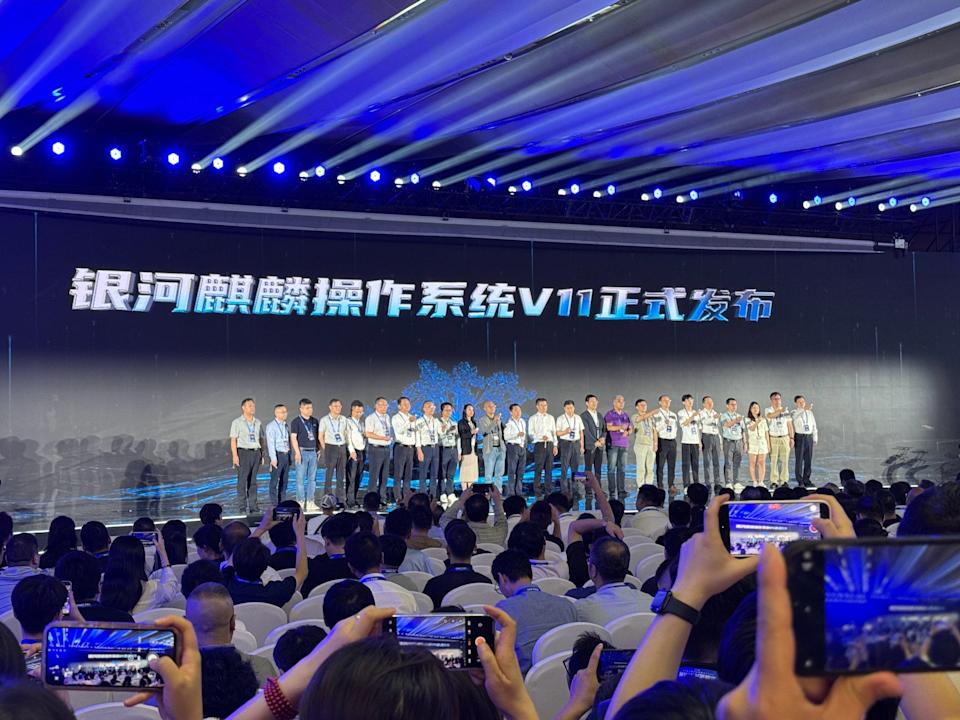
China has officially unveiled KylinOS V11, the newest version of its domestic operating system, designed to reduce reliance on foreign technology and reinforce national tech independence.
Developed by KylinSoft, the OS features a completely redesigned architecture that delivers major improvements in security, stability, and user experience. Unlike foreign platforms such as Windows or Linux, KylinOS V11 is fully optimized for Chinese processors, graphics cards, and motherboards, ensuring deep compatibility with the country’s homegrown hardware.
National and Strategic Use
KylinOS is not new to high-profile deployments. The system has already been used in China’s lunar and Mars missions, where reliability and cybersecurity are mission-critical. Government agencies, military systems, and financial institutions have also adopted the OS, while in some state sectors, it has become mandatory for security compliance.
From Merger to Milestone
KylinSoft was formed in 2020 after the merger of China Standard Software and Tianjin Kylin Information Technology. Its mandate was clear: create world-class Chinese operating systems capable of competing with global giants. In just five years, the company has positioned KylinOS as one of the most widespread domestic OS alternatives in China.
Expanding Across Society
Beyond government and space programs, KylinOS V11 is increasingly used by Chinese universities, banks, and corporations. Its expansion demonstrates Beijing’s strategy to build a self-reliant digital ecosystem, part of a broader push to safeguard against supply chain risks and international restrictions.
With enhanced architecture, stronger cybersecurity protocols, and seamless integration with domestic hardware, KylinOS V11 marks a pivotal step in China’s technological independence. Experts say it could become the country’s flagship platform for both public and private digital infrastructure in the coming years.