

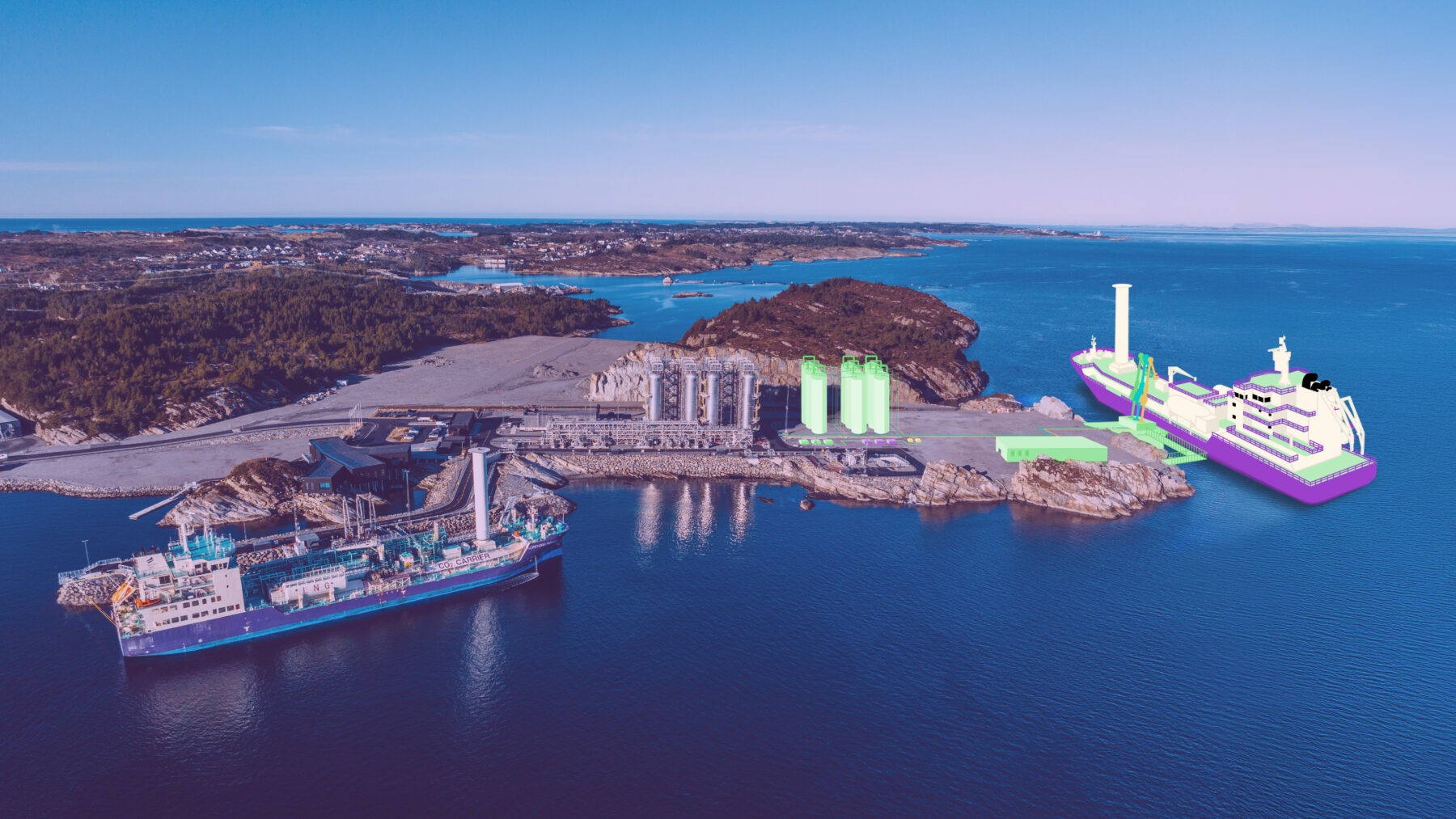
The world’s first third-party CO₂ transport and storage hub is officially operational after Northern Lights injected its first volumes of carbon dioxide beneath the Norwegian North Sea.
In a landmark moment for global carbon capture, partners Equinor, Shell and TotalEnergies confirmed that CO₂ shipped from Heidelberg Materials’ cement plant in Brevik was transported to Øygarden and then injected 2,600 meters below the seabed into the Aurora reservoir.
Phase one of the Northern Lights CO2 storage project has a capacity of 1.5 million tonnes per year, which is already fully booked. With government backing under Norway’s Longship program, the venture demonstrates how public and private cooperation can deliver scalable climate solutions.
“This is a historic milestone,” said Tim Heijn, Managing Director of Northern Lights JV. “Our ships, facilities, and wells are fully operational. We are now focused on expanding capacity.”
From late 2025, the hub will store CO₂ exclusively from Norway before adding shipments from Denmark and the Netherlands in 2026. Phase two, already underway, will boost capacity to at least 5 million tonnes annually, supported by a €131 million grant from the EU’s Connecting Europe Facility.
The expansion will introduce new storage tanks, pumps, injection wells, and additional CO₂ carriers, creating one of the world’s most advanced CO₂ infrastructure networks.
Equinor CEO Anders Opedal described the launch as proof of concept: “With CO₂ now safely stored below the seabed, we have turned carbon capture and storage from vision into reality. This is the foundation for an industry that can scale globally.”
For Norway, the Northern Lights CO2 storage project strengthens its role as a pioneer in energy transition while creating opportunities for Europe to meet its net-zero targets.