
The release of OpenRazer 3.12 marks an important update for Linux users who rely on Razer gaming peripherals. The open-source driver project continues to expand compatibility and improve performance for a wide range of Razer devices, offering Linux gamers a smoother and more reliable experience.
Razer hardware is popular among gamers for its build quality, customizable lighting, and performance features. However, official Linux support from manufacturers often remains limited. Projects like OpenRazer 3.12 fill that gap by providing independently maintained drivers that allow Linux users to fully utilize their devices.
OpenRazer functions as a collection of open-source drivers that enable advanced functionality for Razer keyboards, mice, headsets, and accessories. These drivers work outside the main Linux kernel tree, meaning developers maintain them independently rather than relying on official kernel updates.
The release of OpenRazer 3.12 expands device compatibility by adding support for several newer Razer products. This development ensures that more Linux users can connect and customize their gaming peripherals without relying on unofficial workarounds or limited functionality.
Among the newly supported devices in OpenRazer 3.12 is the Razer BlackWidow V4 Tenkeyless HyperSpeed keyboard. This mechanical keyboard is designed for high-performance gaming while maintaining a compact tenkeyless layout that saves desk space.
The update also introduces support for the Razer Mouse Dock Pro. This accessory allows compatible wireless Razer mice to charge and communicate with the computer through a convenient docking system.
Another addition included in OpenRazer 3.12 is the Razer Huntsman V3 Pro 8KHz keyboard. Known for its extremely high polling rate and optical switches, this keyboard targets competitive gamers who require fast response times.
Linux users can now also access support for the Razer Kraken Tournament Edition headset. This headset offers virtual surround sound capabilities and customizable audio settings designed for immersive gaming sessions.
Additional compatibility arrives with support for the Razer Huntsman V3 Pro Mini. This compact keyboard maintains professional gaming performance while offering a minimal form factor that appeals to users with limited desk space.
The update further includes support for the Razer Tartarus Pro. This gaming keypad provides programmable keys and advanced control options designed for complex gaming inputs.
These additions demonstrate how OpenRazer 3.12 continues to evolve alongside Razer’s expanding hardware lineup. As new devices enter the market, the open-source community works to ensure that Linux users can access their full capabilities.
Beyond device compatibility, OpenRazer 3.12 introduces several functional improvements aimed at enhancing the user experience. One notable improvement focuses on typing performance across supported keyboards.
Developers implemented changes that refine typing responsiveness and input handling. These adjustments help ensure smoother interaction when users type or execute commands using their Razer keyboards.
Bug fixes also play a significant role in the update. Hardware drivers must operate reliably across many different Linux distributions and hardware configurations. The developers behind OpenRazer 3.12 addressed several device-specific issues to improve stability.
One example involves improved horizontal scrolling support for the Razer Pro Click V2 mouse. Users of this productivity-focused mouse can now access more consistent horizontal scrolling behavior when using compatible applications.
Another improvement in OpenRazer 3.12 includes the addition of relative wheel support for the Razer Naga Epic Chroma mouse. This feature enhances how the mouse wheel interacts with software, improving navigation and control.
These refinements may appear minor individually, but they collectively contribute to a smoother experience for Linux users. Reliable device behavior is essential for both gaming and productivity tasks.
The OpenRazer 3.12 update also demonstrates the strength of open-source collaboration within the Linux community. Developers from around the world contribute code, report bugs, and test compatibility with various devices.
This collaborative development model allows projects like OpenRazer to evolve quickly. As new Razer products reach the market, contributors can begin working on driver support even without official manufacturer involvement.
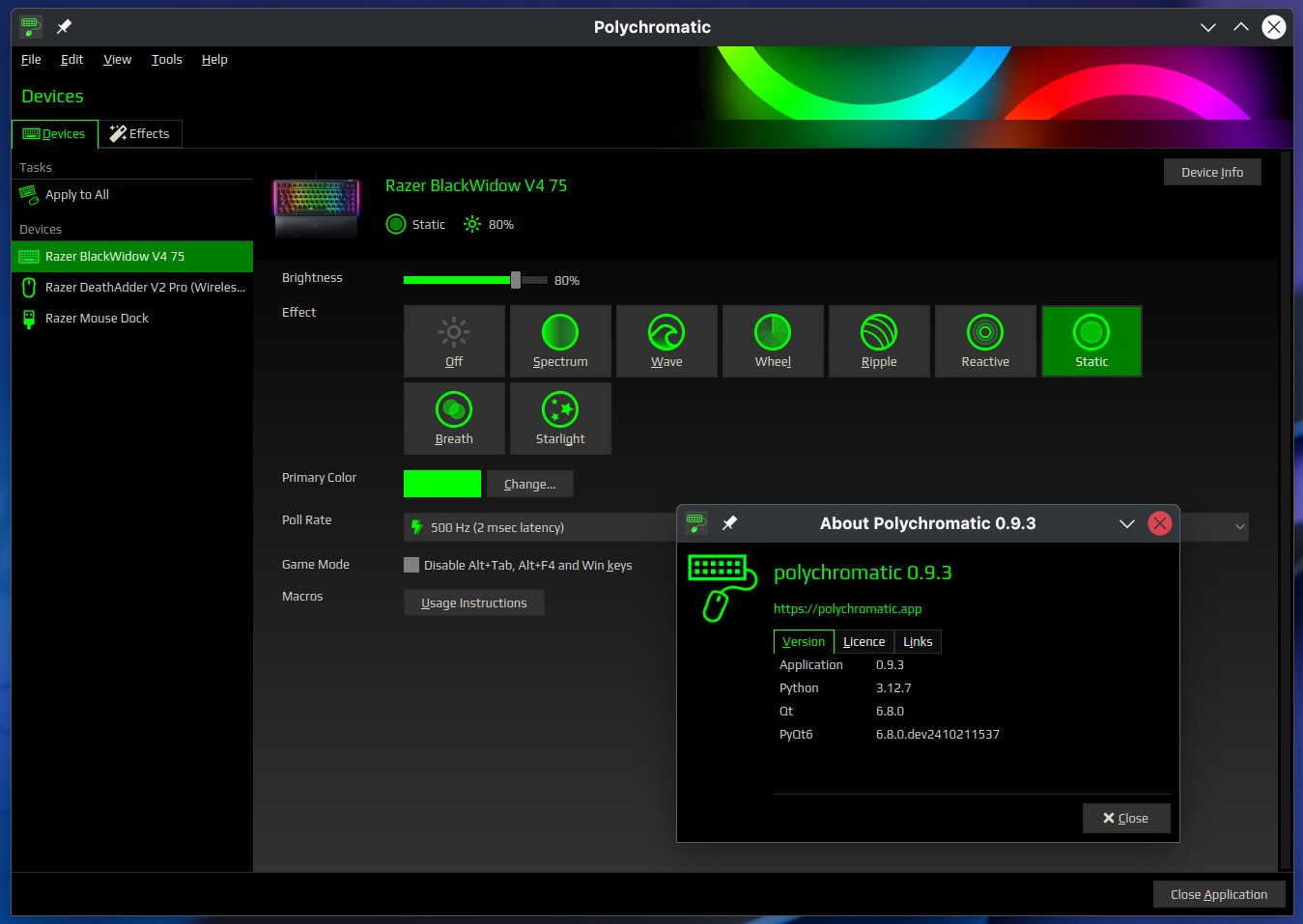
Many Linux users combine OpenRazer 3.12 with graphical management tools such as Polychromatic. This user-friendly interface allows people to control device lighting effects, configure macros, and manage peripheral settings through a simple visual dashboard.
The combination of OpenRazer drivers and the Polychromatic interface creates a more polished experience for Linux gamers. Users gain access to customization options similar to those available through official Windows software.
Gaming on Linux continues to grow as improvements in drivers, compatibility layers, and hardware support expand the ecosystem. Projects like OpenRazer 3.12 play a crucial role in making Linux a more viable platform for gaming enthusiasts.
Peripheral support represents a key factor in this progress. Gamers often invest heavily in keyboards, mice, and headsets designed for competitive performance. When these devices function correctly on Linux, more users feel comfortable adopting the platform.
OpenRazer remains one of the most important tools for enabling Razer hardware on Linux systems. Each new release strengthens compatibility and enhances device functionality.
The launch of OpenRazer 3.12 continues this momentum by expanding device support, improving performance, and fixing bugs that affect everyday usage.
Linux users who rely on Razer peripherals now have another update that brings better stability and broader compatibility. As development continues, future releases will likely add support for even more devices while refining existing features.
For gamers and Linux enthusiasts alike, OpenRazer 3.12 represents another step toward a more complete and user-friendly Linux gaming environment.